Rethinking radishes
By Barbara Damrosch
Published Thursday, April 7, 2009 in The Washington Post

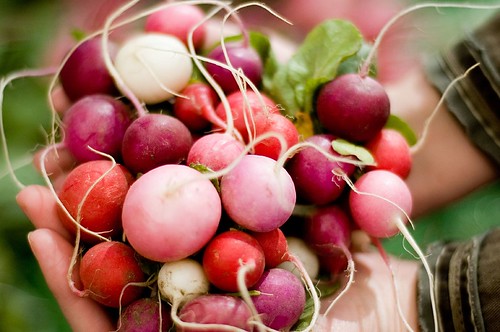
Crisp, crunchy, tangy, zippy, zesty, snappy, peppy, pungent, piquant and sparkly. These are some of the adjectives that the United Fresh Fruit and Vegetable Association, in a 1977 pamphlet, proposed to radish growers for marketing their product. Radishes "give zing to salads," the association wrote.
Well grown and well displayed, radishes sell themselves. I think of exquisite, bunched French Breakfast radishes heaped high in an outdoor market stall, their leaves a healthy green, their small, red, white-tipped cylindrical roots firm and inviting. No need to label them "piquant." But cooks aren't always familiar with the full range of radish types, beyond the little red balls served at Thanksgiving. Some are hard to come by unless you grow your own.
As a gardener-cook in search of a radish education, you might begin with the Baker Creek catalogue, which lists 24 diverse varieties from many lands. You'll learn that there are quick-growing spring radishes, which can be planted right now, and larger winter ones best sown from late summer on, with cool temperatures ahead. (Hot days produce hot radishes with pithy centers, especially if left in the ground too long.) For spring you might try Helios, a bright yellow, olive-shaped radish from Slovakia. Saxa 2, a small, round red one, matures in a mere 21 days. Small weekly plantings would give you a steady supply.
Winter radishes to buy now, plant later include Chinese Green Luobo, much like a daikon with green flesh. Consider the crisp and pungent Long Black Spanish and the deep purple, 10-inch French heirloom Violet de Gournay. Or Philadelphia White Box, "perfect for growing in cold frames over winter," according to Baker Creek. My first choice would be Chinese Red Meat, one of the ancient Beauty Heart types, also called watermelon radish. The round roots, up to four inches across, seem drab at first look, but slice one open and you'll find brilliant magenta color in a radiating starburst pattern.
Whichever radishes you select, give them plenty of moisture. Though a loamy soil is ideal, even clay-soil gardeners can succeed, because radishes tend to shoulder their way upward as they grow.
Plant a radish and you'll get a far more versatile ingredient than you might think. Try sauteeing them, grating them for sauces or adding them to soups, stews and vegetable purees. Cooked radishes lose their bite but not their earthy brassica flavor. Use the tops as you would turnip greens. If they go to seed, put the peppery young pods in salads. For sheer drama, slice disks of Beauty Hearts into a stir-fry, cooking only briefly to retain some crunch. Or serve them raw -- as a dip vehicle perhaps -- if, for you, a radish must have tang, pep and zip.


 Posts
Posts


No comments:
Post a Comment